

Key Takeaways
- Cross-channel reporting reveals how different marketing channels work together to drive conversions
- Manual cross-channel analysis is error-prone due to different metrics, timeframes, and attribution models
- AI tools normalise data across platforms, making apples-to-apples comparisons possible
- Effective cross-channel reporting should show both channel performance and inter-channel influence
The Cross-Channel Visibility Gap
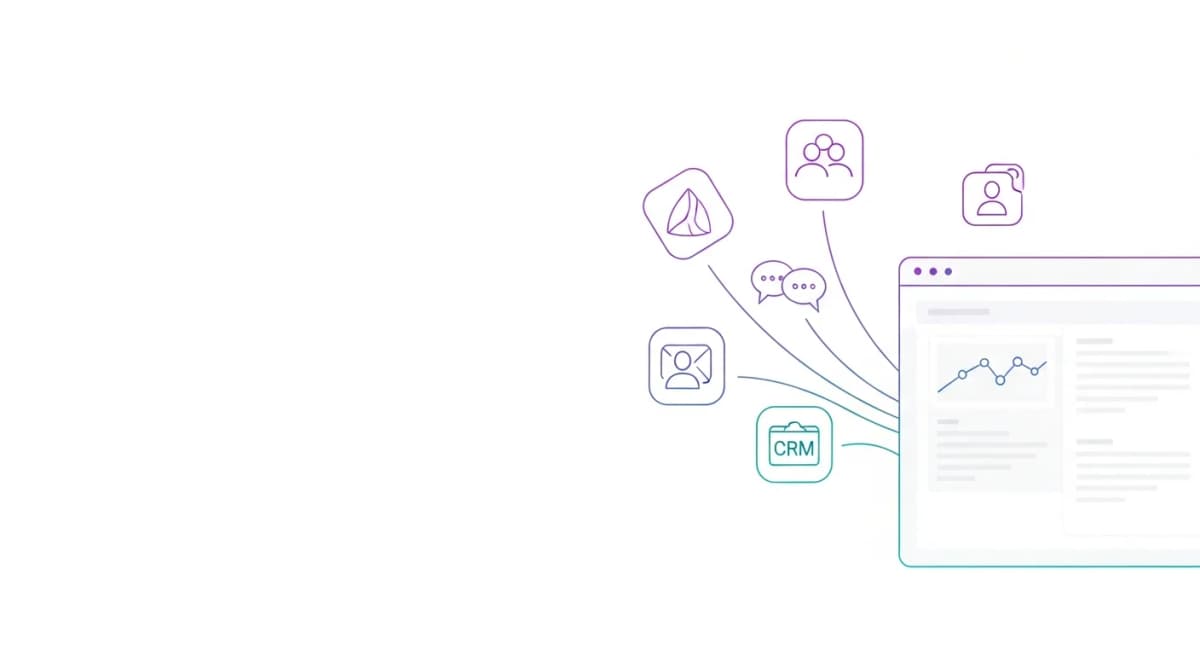
Every marketing and operations team faces the same challenge: critical data is spread across channels that don't naturally connect. Your website analytics tell one story. Your ad platforms tell another. Your CRM tells a third. And your accounting software has the financial truth.
Getting a complete picture means manually stitching these stories together - a process that's time-consuming, error-prone, and always slightly out of date. Cross-channel reporting tools solve this by creating a single intelligence layer across all your platforms.
What Cross-Channel Reporting Unlocks
When you can query across channels simultaneously, entirely new insights become available:
Full-funnel attribution - Track a customer from first ad impression (Meta Ads) through website visit (GA4) to lead capture (HubSpot) to closed deal (CRM). Understand which channels actually drive revenue, not just clicks.
Spend efficiency analysis - Compare cost per lead and cost per acquisition across every marketing channel side-by-side, using actual CRM conversion data rather than platform-reported estimates.
Revenue correlation - See how marketing activities relate to actual revenue trends in your accounting system, not just top-of-funnel metrics.
Anomaly detection - When traffic drops on your website, was it a GA4 issue, a Meta campaign change, or a broader market trend? Cross-channel data makes root cause analysis instant.
GA4 + CRM + Ad Platforms: The Power Trio
The most impactful cross-channel combination for most businesses is:
Google Analytics (GA4) - Provides the web traffic and behaviour layer. How people find you, what they do on your site, and where they convert.
CRM (HubSpot/Salesforce) - Provides the lead and revenue layer. Who your customers are, their journey through your pipeline, and their lifetime value.
Ad Platforms (Meta/Google) - Provides the investment layer. How much you're spending, where you're spending it, and what initial engagement it drives.
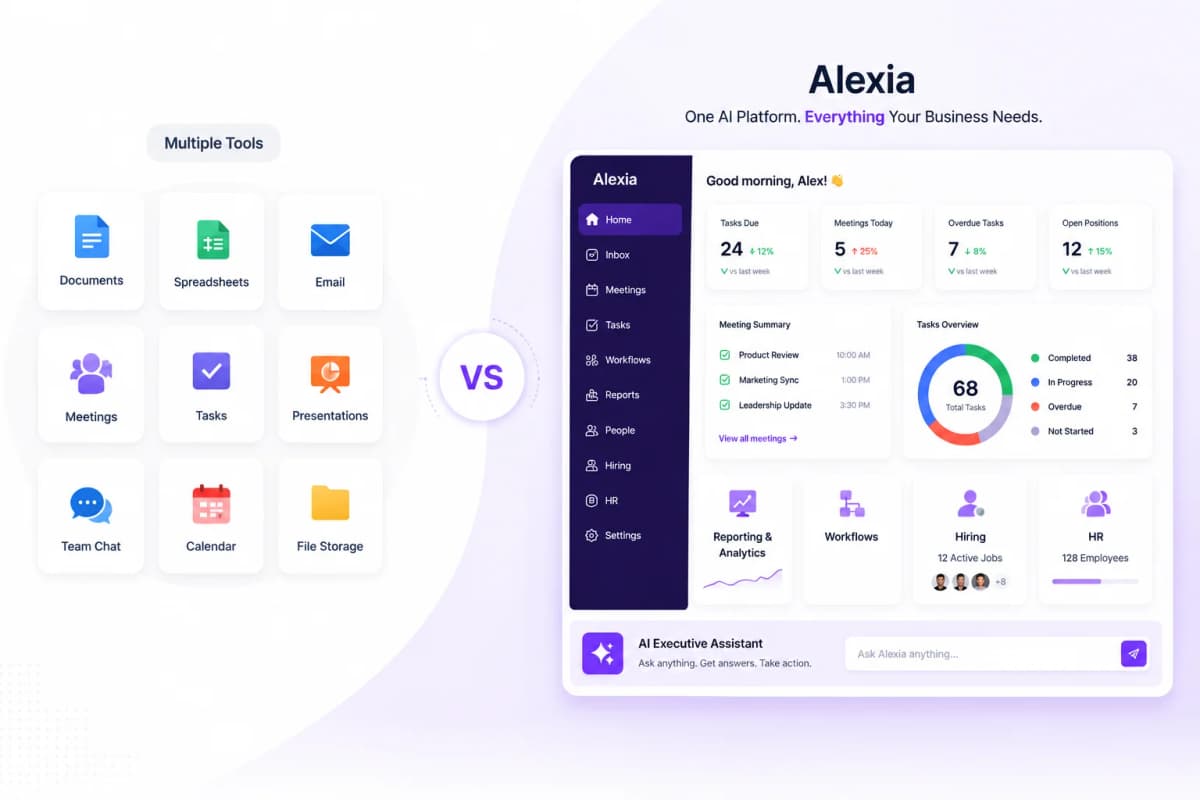
Alexia.ai connects to all three simultaneously, so questions like "What's our true ROAS when we track all the way to closed revenue?" get answered in seconds.
Stop reading about AI reporting. Start using it.
See how Alexia.ai automates the exact workflows covered in this article.
Beyond Marketing: Sales, Finance & Operations
Cross-channel reporting isn't just for marketing teams. With Alexia.ai, you can extend unified reporting across your entire business:
- Sales + Finance: "How does our pipeline value compare to last quarter's revenue?" - Operations + Communication: "Summarise the most important Slack and email threads this week" - HR + Goals: "Which team members are on track with their quarterly objectives?"
The same principle applies: connect the data sources, then ask questions that span them.
Building Your Cross-Channel Reporting Stack
Start with the three tools you use most. For marketing teams, that's typically GA4, your ad platform, and your CRM. Connect them to Alexia.ai and immediately start asking cross-channel questions.
Then add more sources as needed: accounting software for revenue data, communication tools for team insights, and productivity platforms for project tracking. Each new connection makes your reporting more comprehensive and your insights more valuable.

About the Author
Simon Jones
Co-Founder, Teamified
Simon Jones is the co-founder and CTO of Teamified, bringing decades of experience in technology, system architecture, and business transformation. He oversees the technical direction of Alexia.ai, ensuring the platform delivers enterprise-grade automation and intelligence.
Connect on LinkedInStart cross-channel reporting
Connect GA4, HubSpot, and Meta Ads to Alexia.ai for unified insights.