
Key Takeaways
- Traditional dashboards show pre-configured views - AI reporting answers any question dynamically
- Dashboard tools require ongoing maintenance, design skills, and dedicated administrators
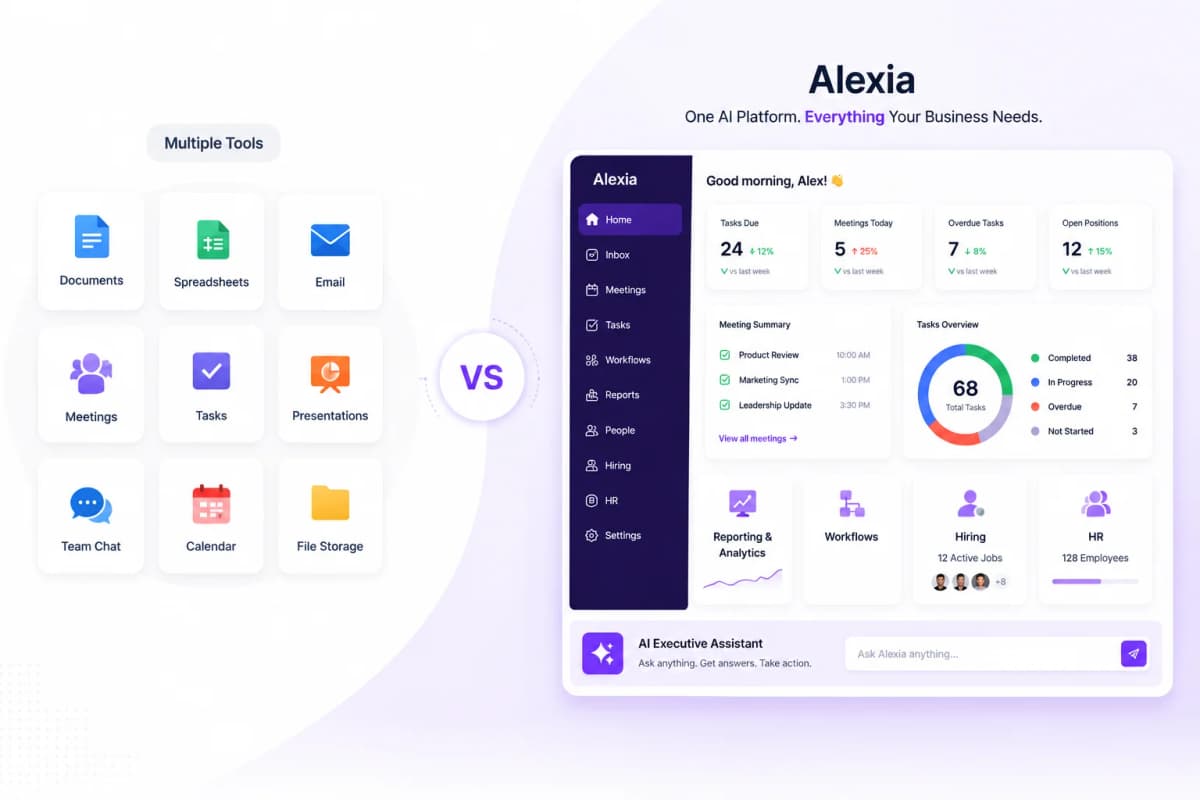
- AI-powered alternatives like Alexia.ai provide the same visibility without the building and maintenance overhead
- The trend in business intelligence is moving from static dashboards to conversational AI interfaces
The Dashboard Paradox
Businesses invest thousands of hours building dashboards. They configure data sources, design layouts, place widgets, and format charts. Then they build another dashboard. And another.
The paradox: dashboards are built to save time, but building and maintaining them consumes enormous time. A typical organisation has dozens of dashboards, many of which are outdated, unused, or duplicative.
Is there a better way? Increasingly, the answer is yes.
Top Dashboard Tools Compared
Tableau - The gold standard for data visualisation. Extremely powerful, extremely complex. Best for organisations with dedicated analysts. $70+/user/month.
Power BI - Microsoft's BI platform. Strong in Microsoft-centric environments. Requires DAX knowledge for advanced use. $10+/user/month.
Looker Studio - Google's free dashboard tool. Good for basic reporting on Google data. Limited outside Google's ecosystem.
Databox - KPI dashboard with pre-built templates. Easy setup but limited intelligence. $72+/month.
Klipfolio - Real-time dashboard tool with strong data connectivity. Good for TV displays. Requires configuration.
Geckoboard - Simple TV dashboard for team metrics. Easy but very basic.
The AI Alternative to Dashboards
AI-powered platforms like Alexia.ai represent a fundamentally different approach to business visibility.
Instead of building and maintaining dashboards, you simply ask questions:
- "How is the business performing this week?" - "Which marketing channel has the best ROI?" - "Are we on track for our revenue target?" - "What's changed since last month?"
The AI connects to all your business tools, analyses the data, and generates a contextual answer. No dashboard to build. No chart to configure. No widget to maintain.
This isn't replacing dashboards with a worse alternative - it's replacing them with a better one.
Stop reading about AI reporting. Start using it.
See how Alexia.ai automates the exact workflows covered in this article.
When Dashboards Still Win
Dashboards aren't dead. They're still valuable for:
Always-on displays - Office TVs showing real-time metrics benefit from persistent dashboards.
Standardised operational views - Factory floors, call centres, and trading desks need consistent, glanceable displays.
Embedded analytics - Product teams that embed dashboards within their software still need traditional BI.
But for the majority of business reporting use cases - weekly reports, monthly reviews, ad-hoc questions, cross-department visibility - AI-powered alternatives are faster, easier, and more intelligent.
Making the Transition
You don't need to abandon your dashboards overnight. Start by trying Alexia.ai alongside your existing dashboard tools.
Next time someone asks for a new dashboard, try generating the answer through Alexia.ai instead. Compare the time investment: hours of dashboard building versus seconds of conversation.
Most teams find that 80% of their dashboard requests can be replaced by AI-generated reports - saving hundreds of hours per year in dashboard building and maintenance.

About the Author
Simon Jones
Co-Founder, Teamified
Simon Jones is the co-founder and CTO of Teamified, bringing decades of experience in technology, system architecture, and business transformation. He oversees the technical direction of Alexia.ai, ensuring the platform delivers enterprise-grade automation and intelligence.
Connect on LinkedInMove beyond dashboards
Get started free and experience business intelligence through AI conversation.