
Key Takeaways
- Traditional BI tools require technical expertise; AI analytics platforms work through natural conversation
- AI platforms proactively surface insights rather than waiting for users to ask the right questions
- Setup time drops from weeks to minutes when switching from BI tools to AI-powered analytics
- AI analytics platforms are ideal for teams without dedicated data analysts or BI specialists
The Evolution from BI Dashboards to AI Analytics
Traditional business intelligence tools revolutionised how companies used data. But they came with a trade-off: complexity. Building a dashboard in tools like Tableau or Power BI requires technical skills, ongoing maintenance, and significant setup time. Most dashboards become outdated within weeks of creation.
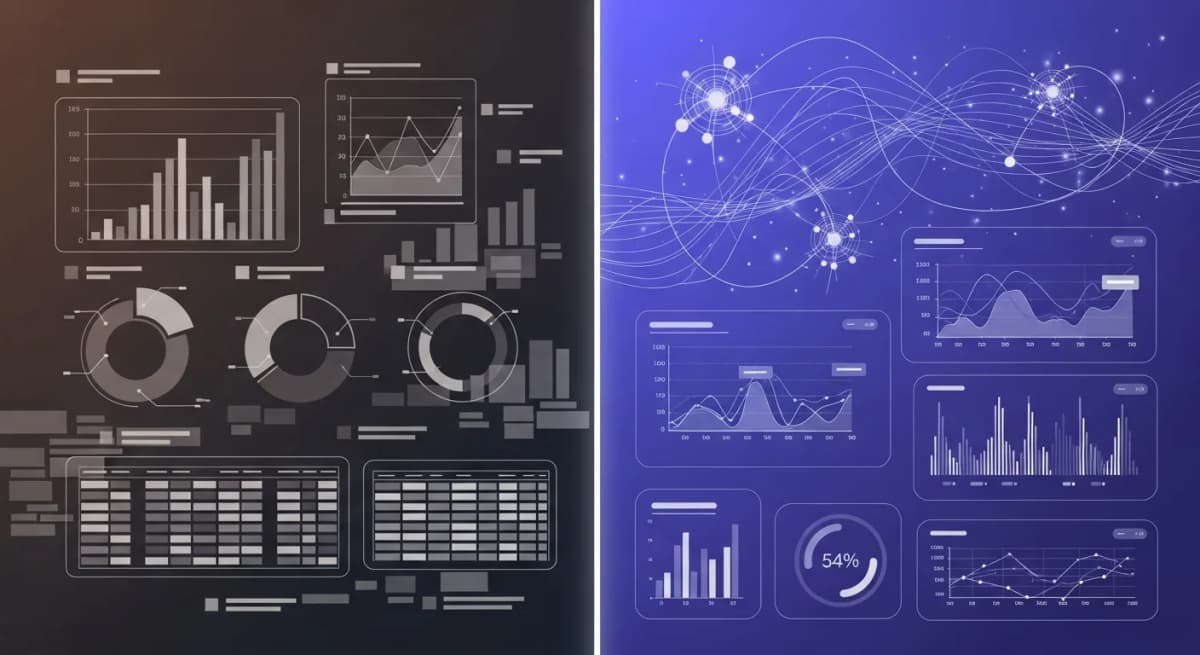
AI analytics platforms flip this model. Instead of building dashboards that display static views of data, you have a conversation with an AI that understands your business and can generate any insight on demand. No SQL queries. No drag-and-drop builders. Just questions and answers.
Why Traditional BI Tools Fall Short
There are several fundamental limitations with traditional BI tools:
High setup cost - It takes days or weeks to configure a proper BI dashboard, and you need technical staff to maintain it.
Dashboard fatigue - Teams build dozens of dashboards that nobody looks at. The data is there, but nobody has time to check it.
Static views - A dashboard shows you what you configured it to show. It can't answer a question it wasn't designed for.
Siloed data - Most BI tools connect to one or two data sources. Getting a cross-platform view requires complex ETL pipelines.
AI analytics platforms solve all of these problems by making data access conversational, dynamic, and multi-source by default.
What Makes an AI Business Intelligence Tool Different
An AI business intelligence tool like Alexia.ai differs from traditional BI in three fundamental ways:
Natural language queries - Ask "What happened to our conversion rate last week?" instead of writing SQL or configuring filters.
Cross-platform intelligence - Alexia.ai connects to your CRM, analytics, accounting, marketing, and communication tools simultaneously. A single question can pull insights from five different platforms.
Proactive insights - Traditional BI waits for you to look at it. Alexia.ai actively monitors your data and alerts you when something needs attention - a goal falling behind, a campaign underperforming, or an unusual trend in your financials.
Stop reading about AI reporting. Start using it.
See how Alexia.ai automates the exact workflows covered in this article.
The ROI of Switching to AI Analytics
Companies making the switch from traditional BI to AI analytics platforms typically see:
80% reduction in reporting time - What took 3.5 hours now takes 30 seconds.
Higher data utilisation - When anyone can ask questions in natural language, more people actually use business data.
Faster decision-making - Real-time data access means decisions are based on current information, not last week's export.
Lower total cost - No BI specialists needed. No dashboard maintenance. Just connect your tools and start asking questions.
Making the Transition
Moving from traditional BI to an AI analytics platform doesn't have to be disruptive. You don't need to rip out your existing tools on day one. Start by connecting your most-used data sources to Alexia.ai, then gradually shift your team's reporting workflows from manual dashboard checking to conversational AI queries.
Most teams find that within a week, they stop opening their old dashboards entirely.

About the Author
Simon Jones
Co-Founder, Teamified
Simon Jones is the co-founder and CTO of Teamified, bringing decades of experience in technology, system architecture, and business transformation. He oversees the technical direction of Alexia.ai, ensuring the platform delivers enterprise-grade automation and intelligence.
Connect on LinkedIn